Untended Rows

Organic agriculture represents a growing sector that generated €145b in global retail sales across 100 million hectares. Such scale reflects a consumer base fundamentally motivated by health and nourishment. Yet, this vast footprint masks a systemic vulnerability.
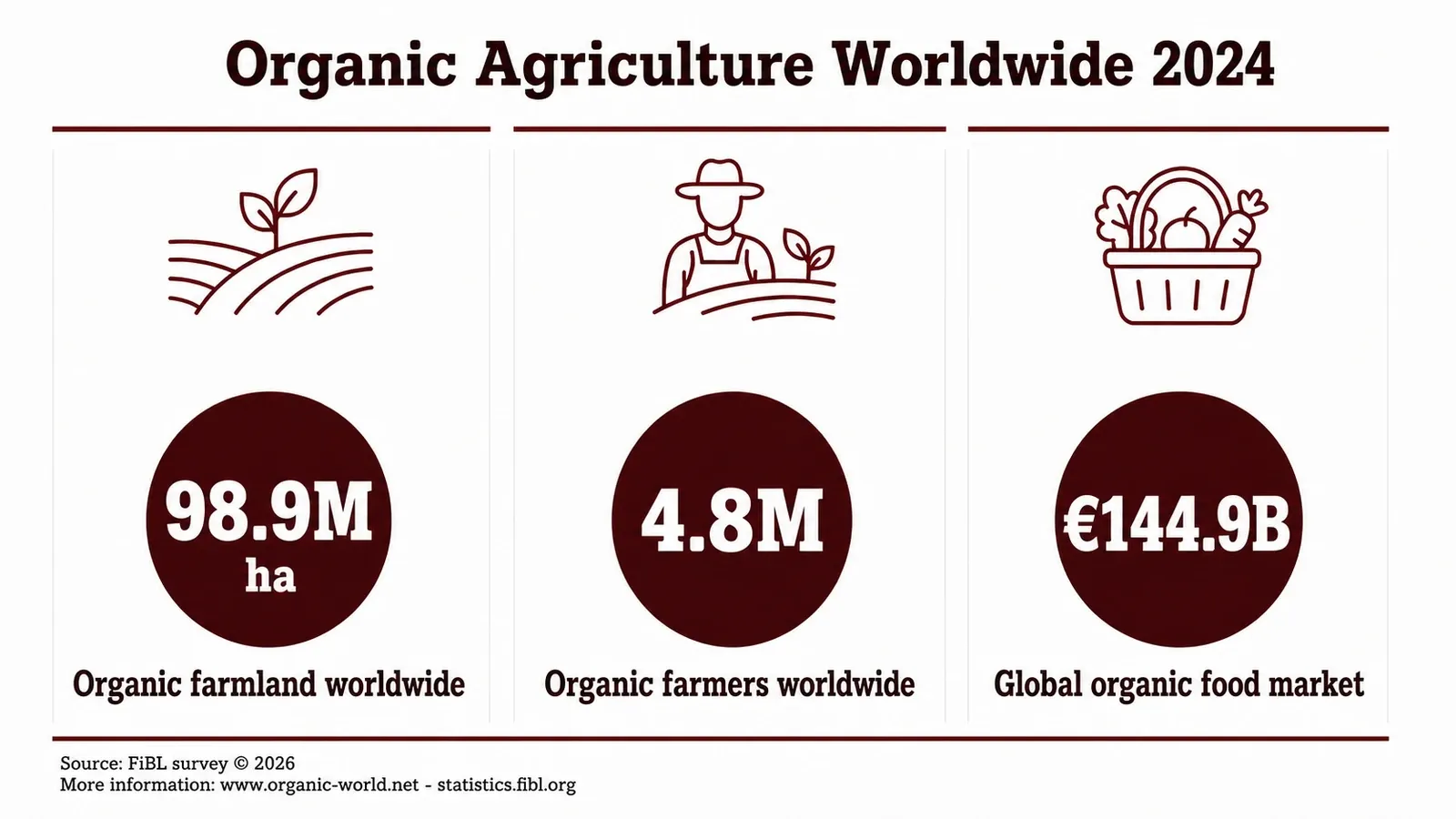
Despite the scale, growers operating within an organic framework remain locked out of the two primary technological axes of modern yield management. Synthetic chemistry and genetic engineering constitute the foundations of conventional agricultural productivity, providing the tools necessary to stabilize harvests and defend against environmental stress. By rejecting these instruments on principle, the organic sector has isolated itself from the dominant mechanisms of agricultural innovation. The fastest-growing segment in the food system is simultaneously the most tool-starved, forced to operate with the fewest instruments available to modern agronomy.
The Half-Kept Promise
From its inception, the organic sector correctly ruled out synthetic pesticides and engineered traits as exclusions central to its identity. Consumers seek out these products precisely because they are grown without the chemical inputs and genetic modifications that could negatively impact human health.
Yet, the regulatory framework functions almost entirely as a list of negatives, defining organic produce by the compliant methods used to grow them rather than by the measured attribute of the food itself. The entire certification architecture is built to legislate absence. An organic product is by definition a product that emerged from a compliant method, with no requirement aimed at the biological value or nutritional density of the final harvest.
Organic mandates quantified laboratory testing on a minimum sample of certified operations annually, but this compulsory apparatus is aimed exclusively at detecting prohibited treatments. Surprisingly, this laboratory infrastructure is not being pointed at what the food should actually contain.
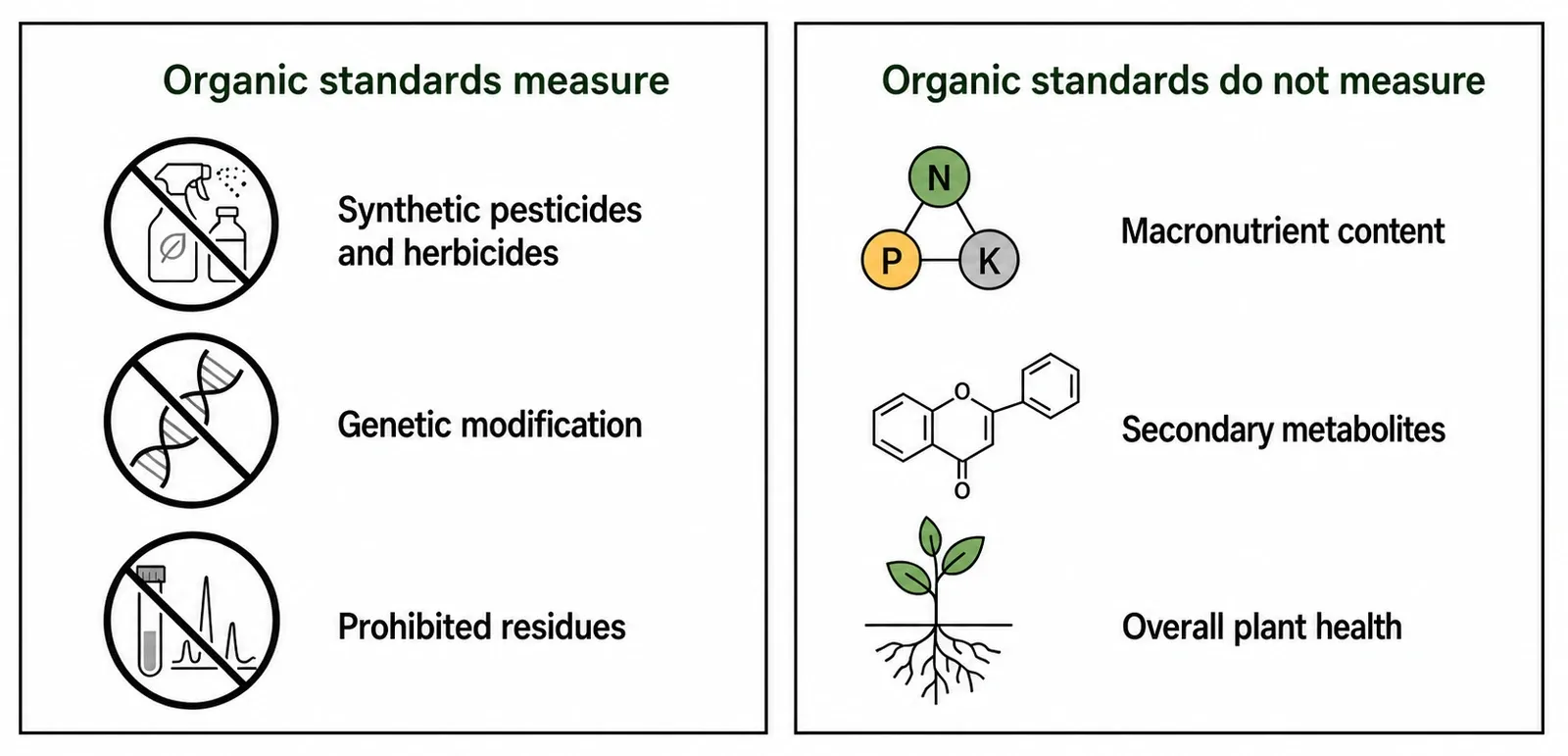
Therefore, the foundational promise of healthy produce is only half-kept. Certifiers rigorously verify the absence of toxins, ensuring that the consumer is protected from contamination. Nothing in the standard, however, asks what nourishment the food actually delivers, leaving the biological reality of the crop unverified.
What Reaches the Plate
What the food contains has undeniably changed over time, with the historical evidence indicating that a century of breeding for yield came with an apparent cost to baseline mineral density. Side-by-side cultivar trials confirm that modern, high-yielding varieties generally carry a lower concentration of specific trace minerals than their historical counterparts. This dilution is a property of the varietal shift itself, representing a recognized trade-off in the pursuit of agricultural volume. Meanwhile, consumers increasingly eat heavily processed diets where heat, refinement, and extensive post-harvest handling routinely degrade precious secondary metabolites.
Flavonoids, alkaloids, terpenoids or isothiocyanates, possess well-documented biological activity, influencing cellular health and metabolic function, including specific anti-inflammatory and anti-cancer mechanisms through interactions with human biology. Diets richer in these whole-food compounds track with better long-term health across large populations and showing better health outcomes.
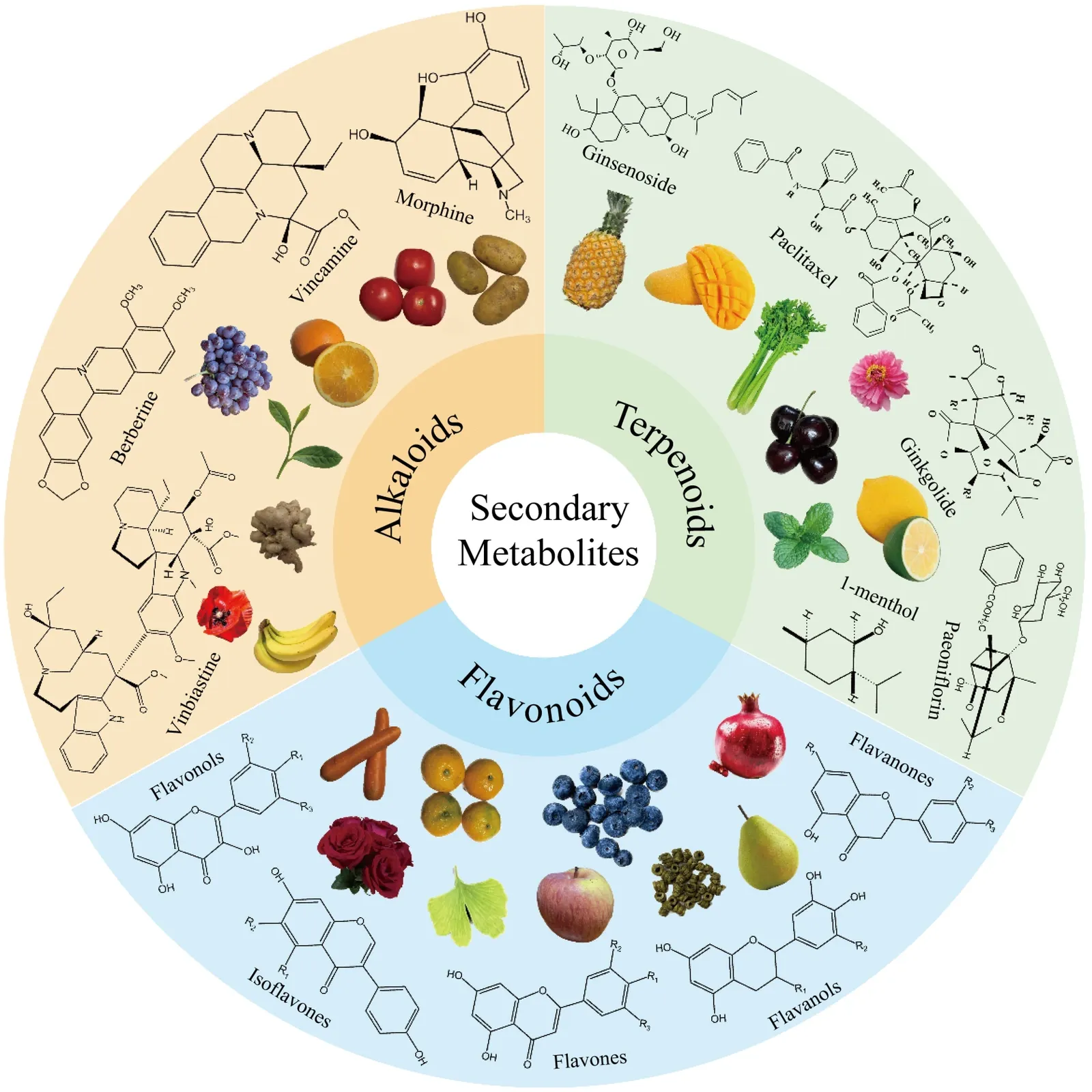
Secondary metabolite classes.
Reprinted from Tang et al., Fruit Research (2024), CC BY 4.0
(doi.org/10.48130/frures-0024-0014).
Raising their baseline concentration in the whole produce can increase systemic delivery. To restore the expected intake of polyphenols, the fraction of the modern diet that remains unprocessed must carry a heavier nutritional load. If the concentration of flavonoids or isothiocyanates is elevated in the field, every serving of that whole produce delivers a correspondingly higher dose to the consumer.
As an example, broccoli bred for high-glucoraphanin can carry three times the precursor compound and reliably delivers 3 to 5 times the circulating compound to the bloodstream. Creating higher concentration of secondary metabolites in the produce turns such botanical enhancement into a direct dietary upgrade without requiring behavioral shifts from the consumer.
Light as Instruction
The organic market requires an instrument capable of driving productivity and nutritional value, without relying on synthetic chemistry or genetic modification.
Plants possess inherent biological capability to sense their light environment and adapt internal chemistry in response. Light perception exerts a crucial influence on almost all aspects of growth, development, and defense. This inherent sensing network directly governs the biochemical pathways responsible for stronger growth and production of secondary metabolites in response to oxidative stress.
Utilizing a laser to deliver a controlled light dose triggers this natural response system, altering gene expression rather than altering the code itself. The plant does the actual work — the light simply acts as the instruction set. By stimulating specific photoreceptors, we can initiate transcriptional changes that not only boost germination but also upregulate the abiotic stress resistance and increase potential for secondary metabolite accumulation without sacrificing yield.
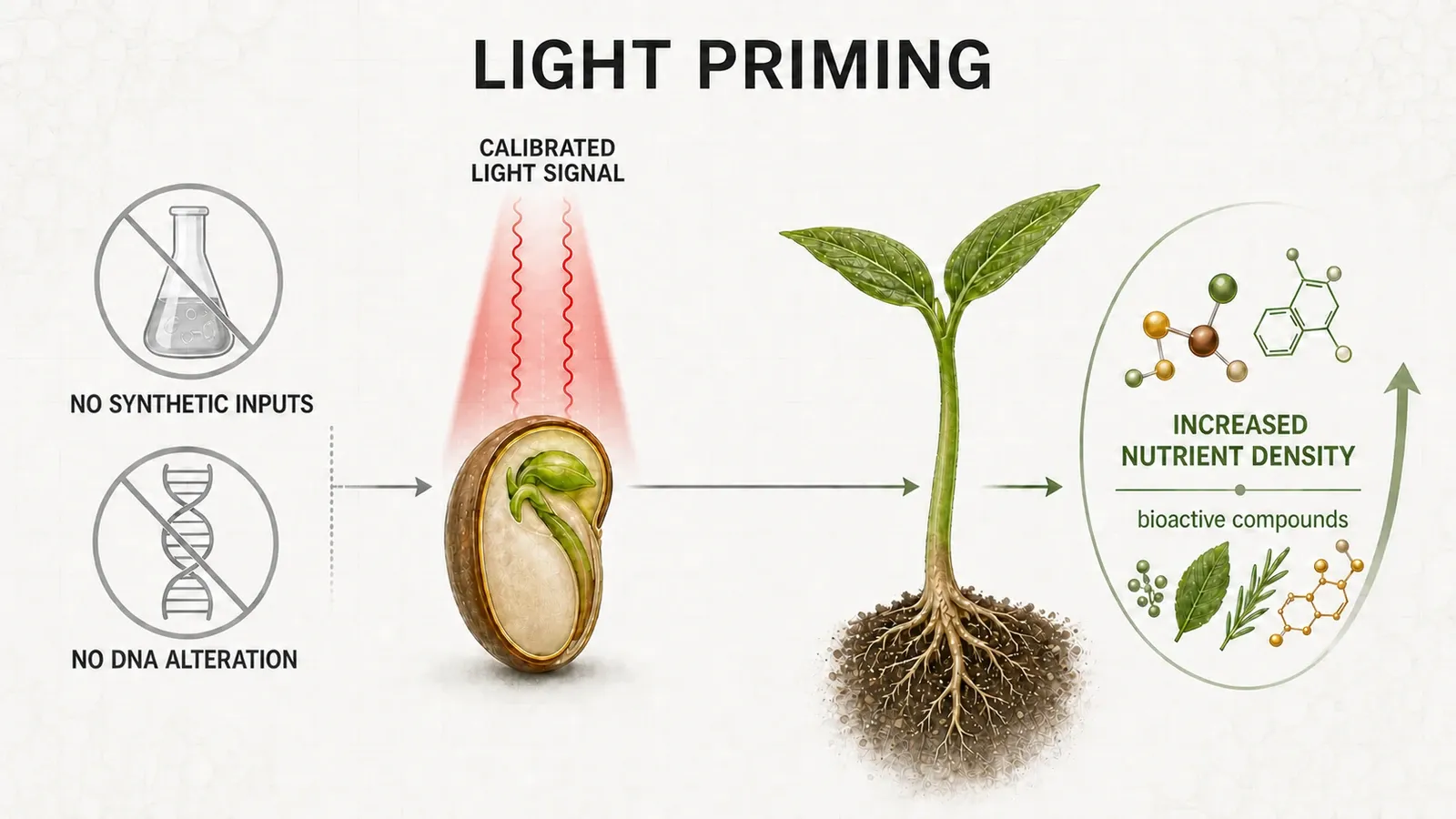
Light priming activates seed’s metabolism to strengthen its stress response
and boost accumulation of nutrients and secondary metabolites.
Epigenetic activation can enable the plant to safely increase the concentration of protective compounds without adding foreign inputs or changing trait identity, which aligns perfectly with the restrictive architecture of organic certification and offers a scalable mechanism to elevate crop value.
Rows Worth Tending
Left unaddressed, the untended rows of the global organic market represent both a staggering economic inefficiency and a missed opportunity for improved human nourishment. Millions of hectares are currently managed without access to the tools required to optimize their biological output. This infrastructure gap sustains frictions that act as a fundamental limit on the organic sector’s potential to scale.
Building the methods to address this gap requires moving beyond avoiding toxic chemicals and into actively driving the biological value of the crop. The industry must transition from merely verifying what is missing to actively cultivating what should be present.
At Chromavia, we are engineering this physical lever to decouple yield stability and nutritional delivery from chemical dependencies, providing the tool that can deliver to consumers the full promise: no synthetic residues and optimized nutrient profile.