Light as Information
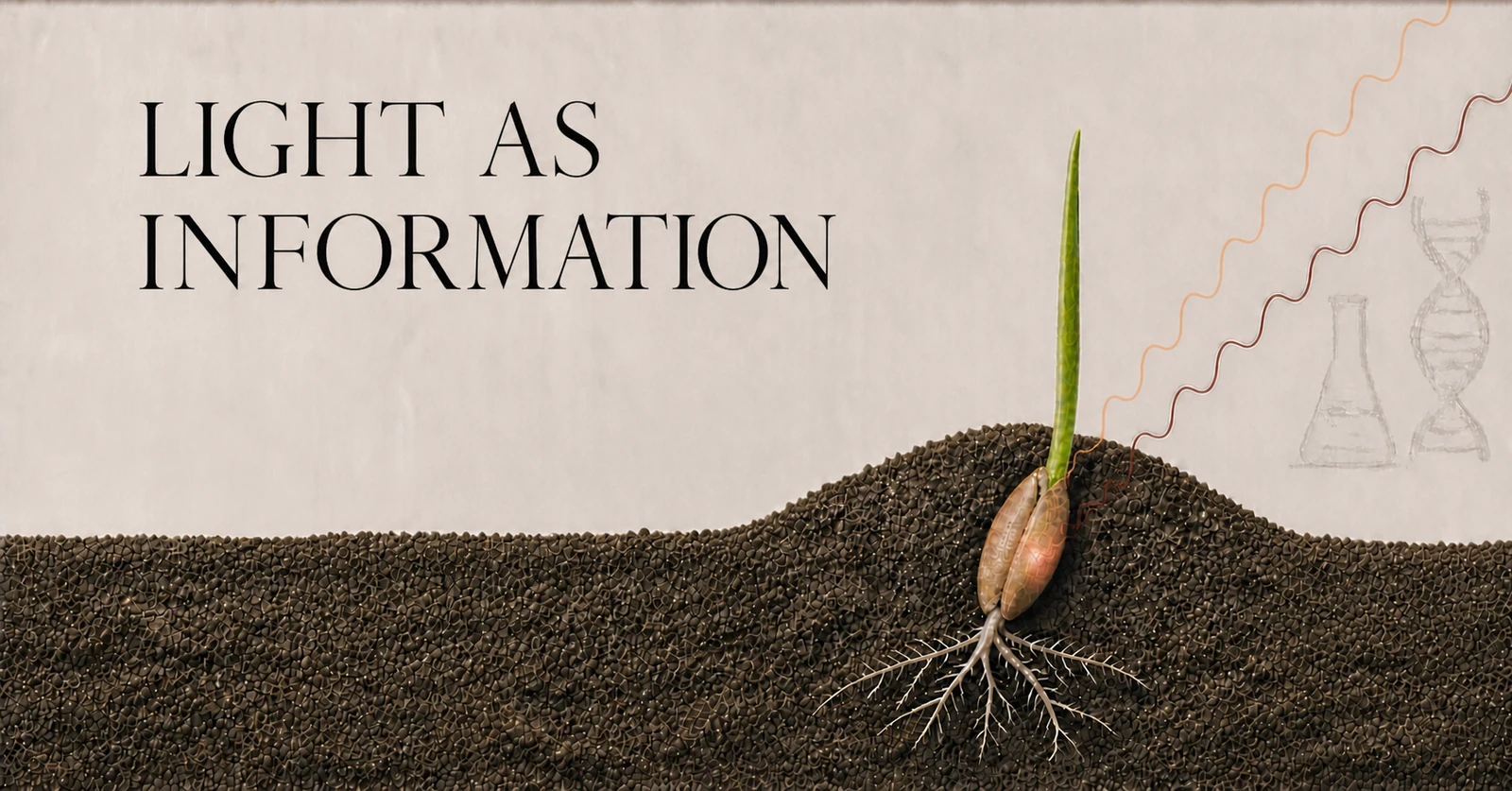
Every system performs at its best when it exploits its available resources to the maximum, given the environment it is in. Misreading the environment, or underestimating the resources needed can have existential consequences.
A seed lives exactly on this edge. It cannot move, shelter or control the weather. It has to predict conditions buried underground and commit to a decision: germinate now or wait.
Even under apparently ideal conditions, germination can be slow, incomplete or uneven. Non-uniform emergence adds labour, monitoring, and delays. Weak early emergence gives weeds time to establish before the crop grows, thus, increasing the amount of fertilizers required later on. On the opposite end, seedlings that emerge rapidly and develop a large leaf area are better positioned to compete for light and space.
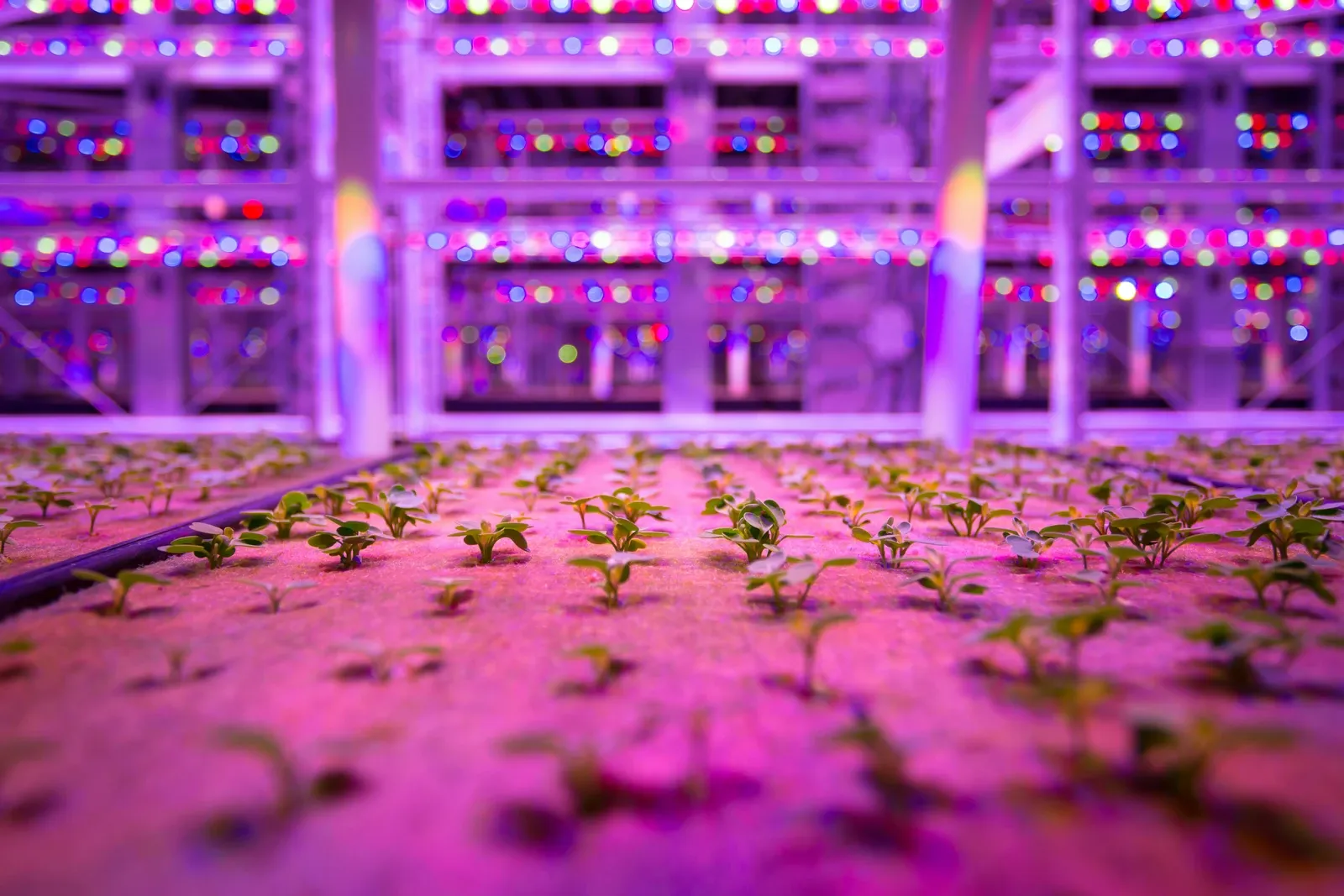
Although artificial light is widely used and carefully optimised in vertical farming, its potential to improve seed germination and early vigour has yet to be adopted at scale.
For almost a century, humans have sought to improve the speed, uniformity and resilience of germination by influencing the biological balance within seeds. Since the third agricultural revolution, two of our most powerful tools used for seed priming have been chemistry and genetics. Both are powerful, but each has important constraints. At Chromavia we believe there is another way to work with the seed: light.
A Novel Axis
Plants have evolved an elegant solution to this problem, a regulatory system centred on the balance between two hormones: gibberellins (GA) and abscisic acid (ABA). The former pushes germination forward, while the latter holds it back.
Once a seed commits to germinate, it is up against everything it meets on its way out of the soil. In biological terms we call this stress, and it can be of two types. It can be abiotic when it is caused by drought, salinity, extreme weather, heavy metals, or biotic when it is caused by fungal and bacterial pathogens, viruses, insects and other biological threats.
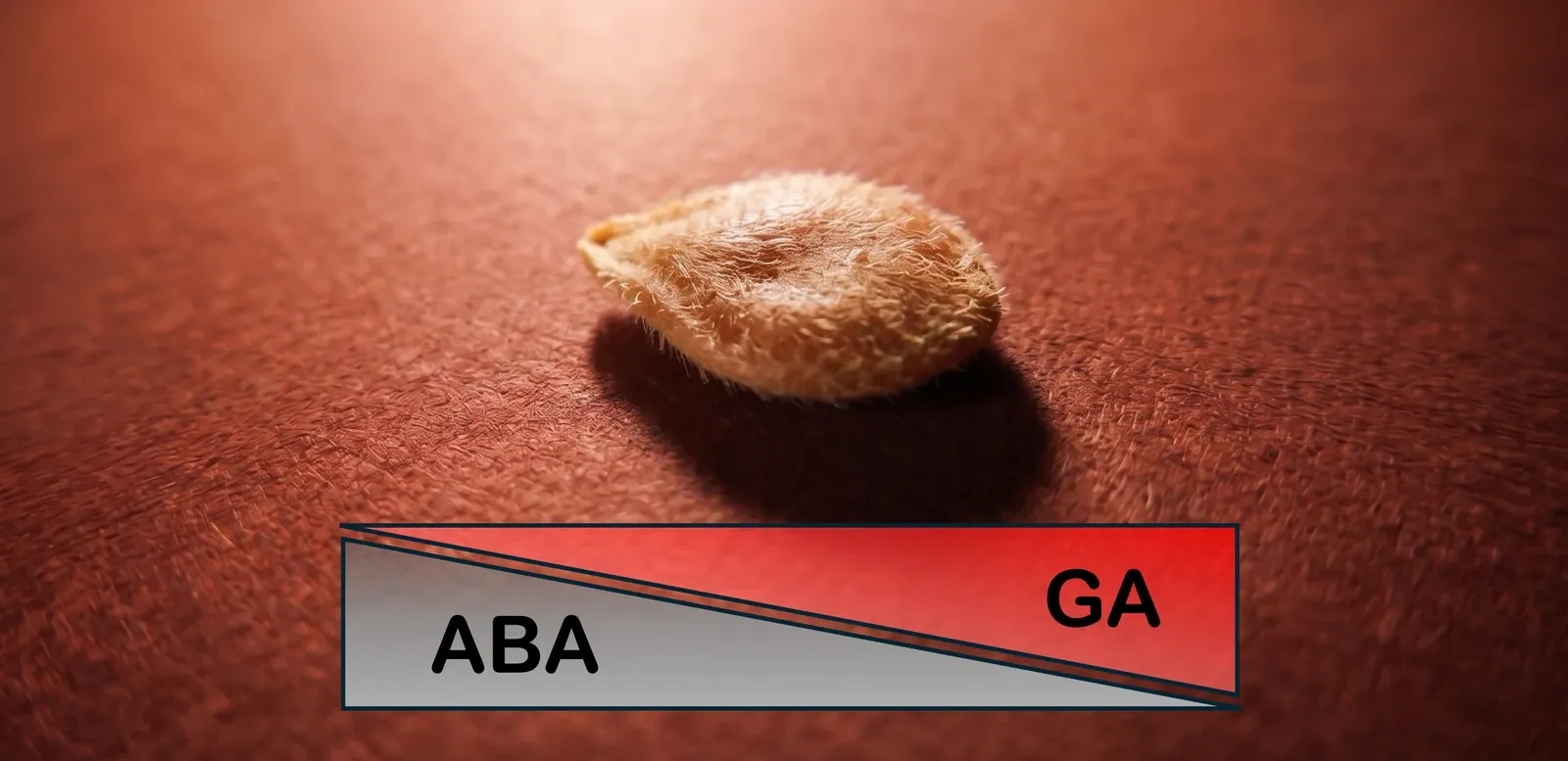
Exposure to red light can affect a seed’s hormonal balance. Specifically, it affects the ratio between gibberellins (GA) and abscisic acid (ABA).
The industry’s standard answer has often been to apply chemistry directly to the seed. Fungicides and insecticides are coated onto the seed surface to protect it and the young seedling during a vulnerable stage. The approach is practical, which helps explain why prophylactic seed treatments have become so widespread.
These coatings work, but they carry a trade-off. Studies of neonicotinoid seed treatments have found that only a fraction of the applied active ingredient is taken up by the crop. The remainder does not simply disappear: depending on the compound and environmental conditions, residues may remain in the soil, degrade into metabolites, or move into surrounding environmental compartments. Compounds do not always stay where we put them.
Genetics is more elegant but at the same time more constrained. Conventional breeding has reshaped agriculture, while genome editing is changing the way we approach diseases. Nevertheless, regulators draw a clear line around alterations to DNA.
Under the EU’s current framework, simpler edits that could also arise through conventional breeding will follow a streamlined regulatory route, while more complex alterations will remain subject to GMO rules. Neither category, however, will be permitted in organic production. This creates an additional barrier for growers serving organic markets, where certification and consumer trust are central to the value of the crop. Light offers a different route: it can influence the seed’s existing biology without altering its DNA, and therefore does not encounter this particular restriction.
The Balance of Light
Seeds, and plants more generally, perceive light through specialised molecules called photoreceptors. Red light converts phytochromes, the photoreceptors responsible for detecting red and far-red light, into their active form.
Active phytochromes then promote the removal of germination repressors, shifting hormone metabolism and signalling towards greater GA activity and reduced ABA activity. Light may also influence the seed’s redox balance. During germination, controlled levels of reactive oxygen species act as signals that help mobilise stored reserves and coordinate the hormonal processes involved in dormancy release. The effect is not simply an increase or decrease in ROS but an effective light treatment that triggers a response while also activating antioxidant defences that prevent damaging ROS accumulation. These hormonal and redox changes can accelerate germination, increase the proportion of seeds that germinate and narrow the emergence window across a seed lot.
The response is regulatory rather than genetic: the seed changes how it expresses its existing DNA without altering the DNA sequence itself. Whether this early light exposure produces lasting changes in stress responses depends on the species, cultivar, dose and timing. Light is information, but the seed still decides how to interpret it.
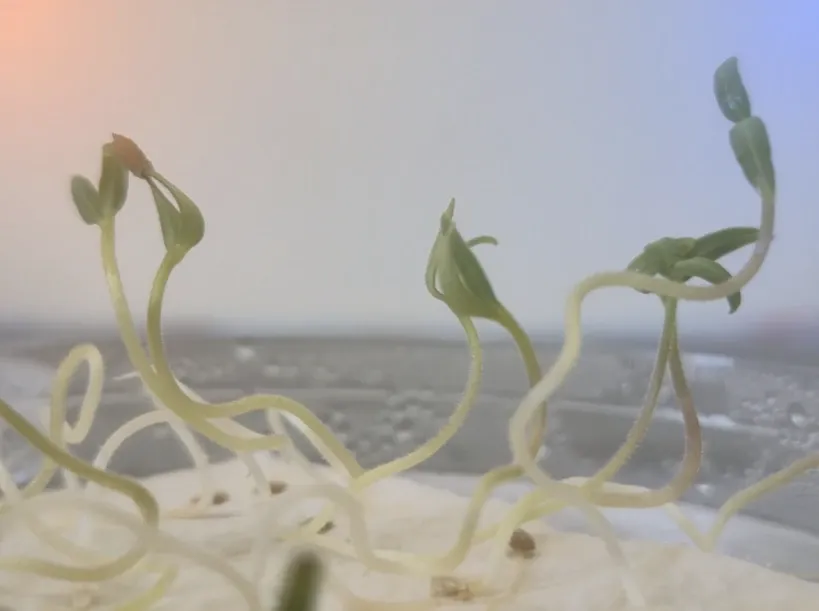
Light influences plants throughout every stage of growth. Its spectral quality shapes plant development and stress responses, affecting how healthy and resilient a plant becomes.
At this point, an obvious objection emerges: how can a seed that germinates quickly also be prepared to withstand the stress ahead?
Germination is a bet on the future: it mobilises reserves and generates ATP. Stress defence is a hedge: it invests resources in protection and conservation.
A signal that maximises one process should, in principle, compromise the other. So how can these two processes be balanced? Paradoxical as it may sound, the contradiction disappears once we look at the architecture of the system.
The main purpose of the ABA/GA hormonal balance is to move the seed from dormancy towards germination, and light quality is one of the environmental inputs that can push that decision. What happens after germination belongs to another layer: the seedling’s capacity to survive establishment.
These two layers run on overlapping but separable pathways. Light affects both because a plant interprets light as information and not just energy. Intensity, duration, and wavelength are all parameters that can precisely provide the plant with information about its light environment. A precise light treatment may therefore act at more than one point. It can shift the germination response, helping seeds germinate and emerge more synchronously. On top of that, it delivers a calibrated mild stimulus that may influence defence and repair pathways during early establishment. The goal is both speed and stress resilience. Earlier emergence gives seedlings more time to establish their root systems and access water and nutrients, while greater uniformity makes irrigation, fertilisation and harvest timing more predictable. More reliable establishment can also reduce the need for re-sowing and give the crop a stronger head start against weeds.
This is the working principle at Chromavia: controlled spectra, controlled germination responses and induced high vigour. In our early trials, treated seed lots emerged faster and more uniformly and produced seedlings with a higher vigour index than untreated controls. These results fit the proposed mechanism.
As simple as it sounds, the response is not universal. Every species, cultivar and seed lot has its own physiology. Too little light may do nothing, while too much light, or the wrong wavelength or timing, may be ineffective or harmful. Reviews of low-intensity red-laser treatments show how strongly the outcome depends on the species, seed condition, treatment method and dose.
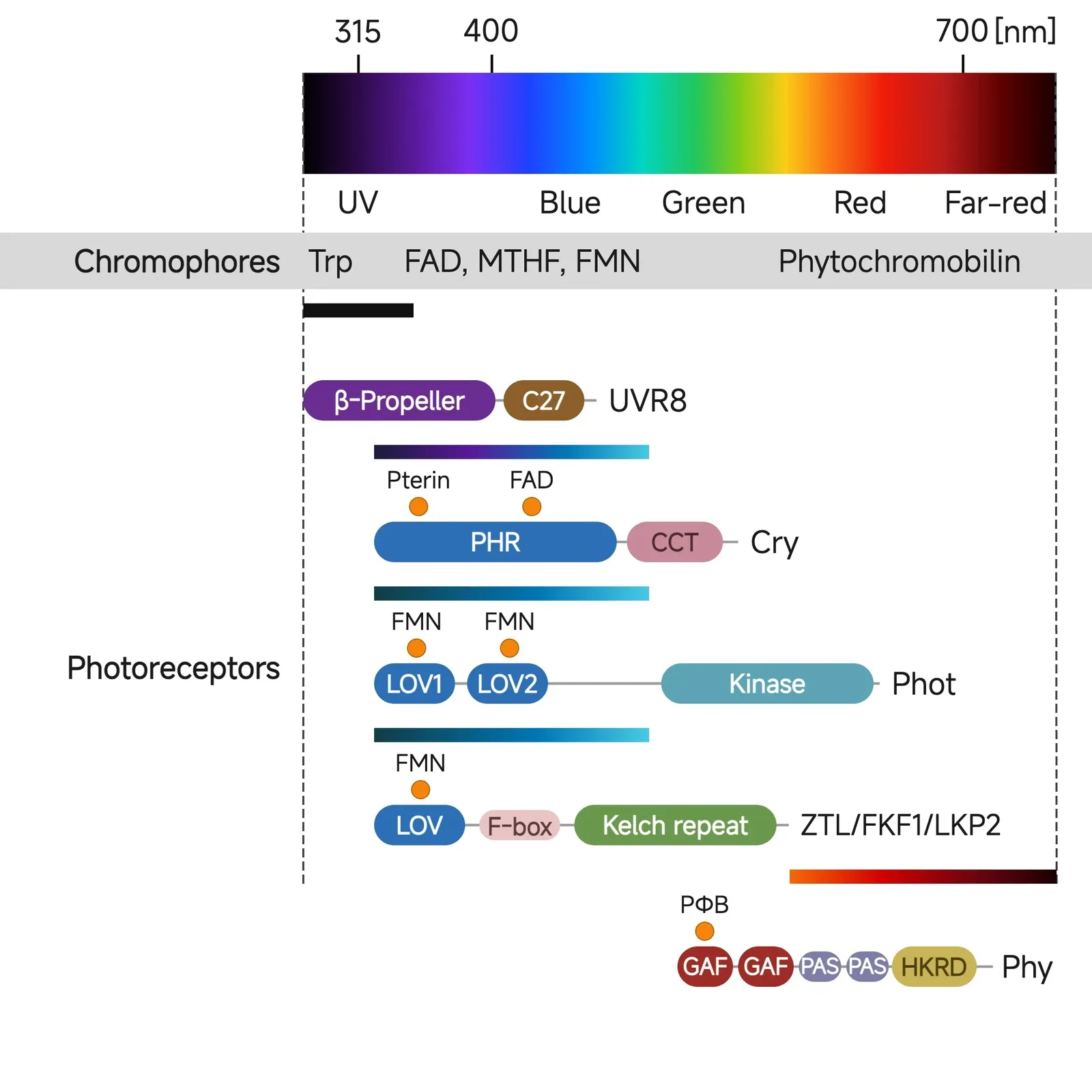
This is why diagnostics are crucial. The physiological state of the seed lot must first be understood, and its response to treatment must then be measured. Chromavia aims to close this loop by connecting diagnosis, treatment selection and outcome assessment, allowing each light protocol to be adjusted and reproduced for the specific seed lot.
Closing the Loop
Chemical coatings protect the seed, but they can also affect its environment. Genetics treats the seed as a code to be rewritten. Light treats it as a natural system that already carries what it needs, waiting for the right signal.
Agriculture spent the last century tuning the first two levers and both have important limitations. Light works with the plant’s own machinery rather than around it. It is not a substance but a signal.
At Chromavia, we are building tools to use light precisely, at the right moment, to work with the biology already present in every seed.